


Somewhere along the way, difference became dangerous.
Instead of seeing men and women as variations within the same species we’ve been encouraged to see each other as opposing camps. We’re suspicious, defensive, at odds with each other. And while this framing might generate clicks, outrage, and endless commentary, it does something devastating to intimacy.
It makes it almost impossible to feel safe with one another.
After more than two decades working with couples and individuals, one thing has become very clear to me: the “war between the sexes” is not only unnecessary, it’s completely unhelpful.
Because the fact is: women and men are not that different:
The most similar creature to a man is a woman.
The most similar creature to a woman is a man.
More Similar Than Different
We share around 99% of our DNA with chimpanzees and about 60% with fruit flies, for goodness’ sake. So while the idea that men and women are so fundamentally different as to be “from different planets” makes for catchy book titles, it collapses under even the most basic observation of real human beings.
Yes, if you lined everyone up from most to least [insert trait] — strength, libido, emotional expressiveness, assertiveness — you’d often see a skew at the extremes. But you’d also see a vast overlap in the middle.
Plenty of women are stronger than plenty of men.
Plenty of men are more emotionally articulate than plenty of women.
There are women who want fast sex and a clear finish, and men who love long, slow sensual connection.
There are men who get teary and women who get fiery.
There are women who want to fix things and men who want to be heard.
Real life is far messier, and far more interesting, than our stereotypes allow.
The Real Sources of Friction
When I work with couples, the differences that cause the most friction are rarely about gender. They’re about individuality: how much sleep someone needs, how they handle stress, how they like to parent, how they regulate emotion, how quickly they shift gears, how close they want to be to extended family.
These differences exist whether two people are male, female, same-sex, or non-binary. Gender may flavour them, but it doesn’t determine them.
And yet, culturally, we’ve been encouraged to fixate on gender as the primary fault line.
Patriarchy Is Not “Men”
This is where I want to be very clear, because confusion here fuels a lot of unnecessary hostility: Patriarchy is not “men”.
Patriarchy is a hierarchical system that privileges dominance, extraction, competition, and control. It benefits a small number of people at the top, while constraining and distorting the lives of everyone else — including men.
Acknowledging our shared humanity does not mean ignoring real experiences of inequality, harm, or power imbalance. It means refusing to let those realities turn us against each other as enemies.
When men and women are encouraged to see each other as enemies, we stop noticing the system that profits from our division. We become busy blaming one another instead of questioning the structures that keep us disconnected from our bodies, our pleasure, and our relational capacity.
You Cannot Make Love Across a Battlefield
From a nervous system perspective, this matters enormously.
Intimacy — erotic, emotional, relational — requires safety. And safety cannot exist in an atmosphere of accusation, suspicion, or chronic defensiveness. When people feel under attack, they brace and polarise. They reach for certainty and ideology rather than curiosity and contact.
But you cannot make love across a battlefield.
Difference Is Not the Problem
That doesn’t mean differences don’t exist, of course they do.
Biologically, hormonally, neurologically, men and women are not identical, and that’s not a problem. Difference was never the issue, it’s how nature works. Diversity is how humans evolved to survive and thrive.
The problem begins when difference is framed as opposition rather than as a resource for mutual learning and growth. That’s when it becomes a reason to dominate, dismiss, or defend, instead of an invitation to collaborate and stay curious.
Difference as a Resource
In healthy relationships, and healthy cultures, difference is a resource:
Different strengths.
Different tendencies.
Different ways of perceiving and responding.
When we stop trying to make each other wrong for being different, and instead become curious about how those differences might fit together, our nervous systems soften and the relational field opens.
And intimacy becomes possible again.
Finding Our Way Back to Each Other
There is no need for a battle of the sexes.
We are not from different planets. We are all from Planet Earth.
We are all human beings, shaped by the same nervous systems, the same needs for safety and belonging, and the same longing for connection, meaning, and aliveness.
When we remember that, we stop fighting each other and start finding our way back into relationship.
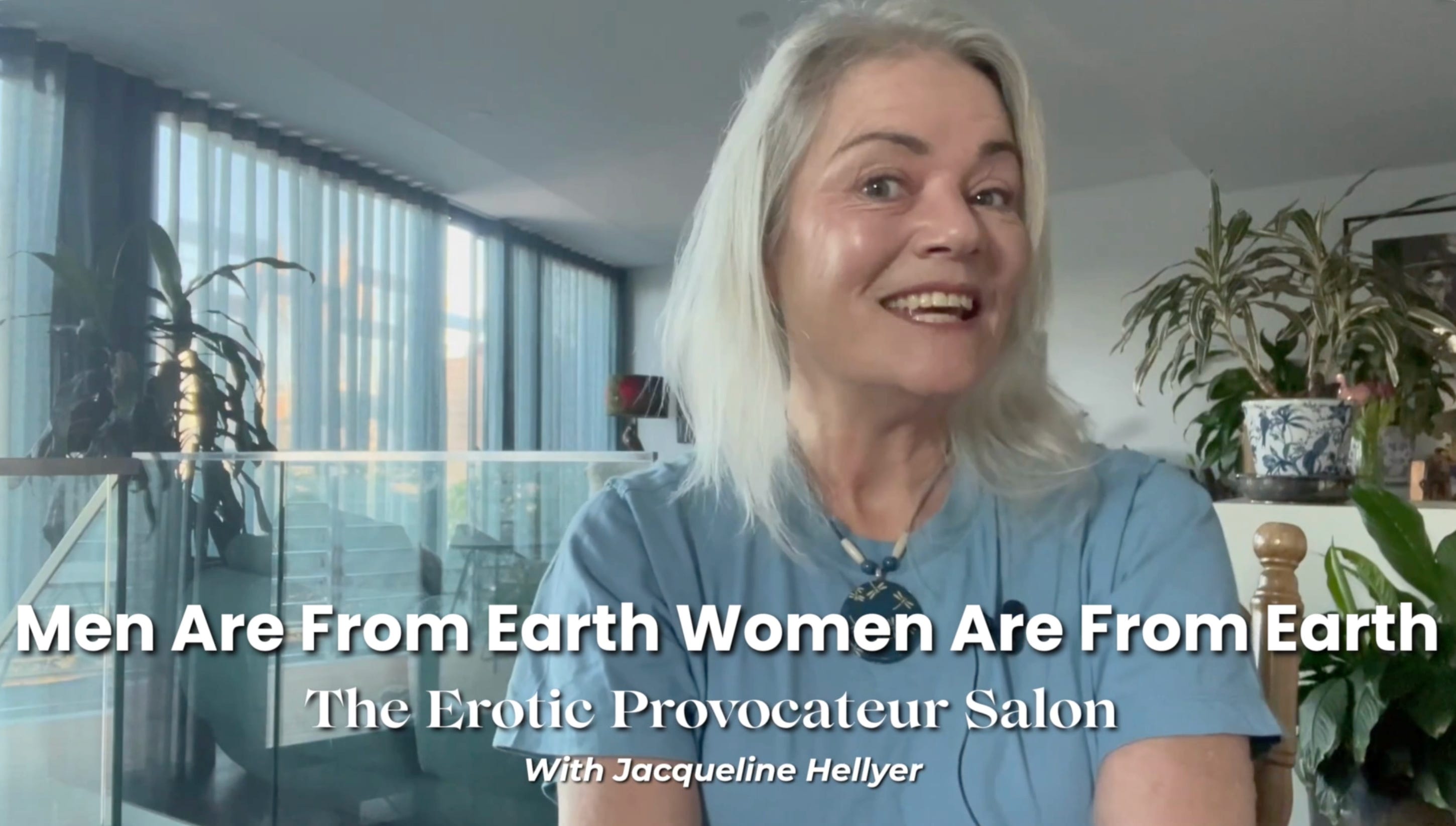
Please feel free to stay with me longer in the Salon, where I muse further on this topic.
Glad it resonated with you!
This simply bears repeating:
Plenty of women are stronger than plenty of men.
Plenty of men are more emotionally articulate than plenty of women.
There are women who want fast sex and a clear finish, and men who love long, slow sensual connection.
There are men who get teary and women who get fiery.
There are women who want to fix things and men who want to be heard.